
Battery-powered garden tools are becoming an increasingly practical option for homeowners who want to maintain their outdoor spaces without the noise, fuel, and routine engine maintenance associated with many gas-powered machines. From cordless lawn mowers and hedge trimmers to leaf blowers and string trimmers, today’s battery-powered equipment covers a wide range of everyday gardening tasks.
However, choosing the right equipment involves more than comparing battery capacity or looking at advertised power. Runtime, charging speed, tool weight, battery compatibility, maintenance requirements, and long-term costs can all influence the ownership experience.
For first-time buyers and experienced gardening enthusiasts alike, understanding these factors before purchasing can help prevent unnecessary expenses and make routine yard work more convenient. This cordless garden tool buying guide explains what to look for when comparing products and how to choose equipment that matches your garden, workload, and budget.
1. Understand Battery Voltage, Capacity, and Power
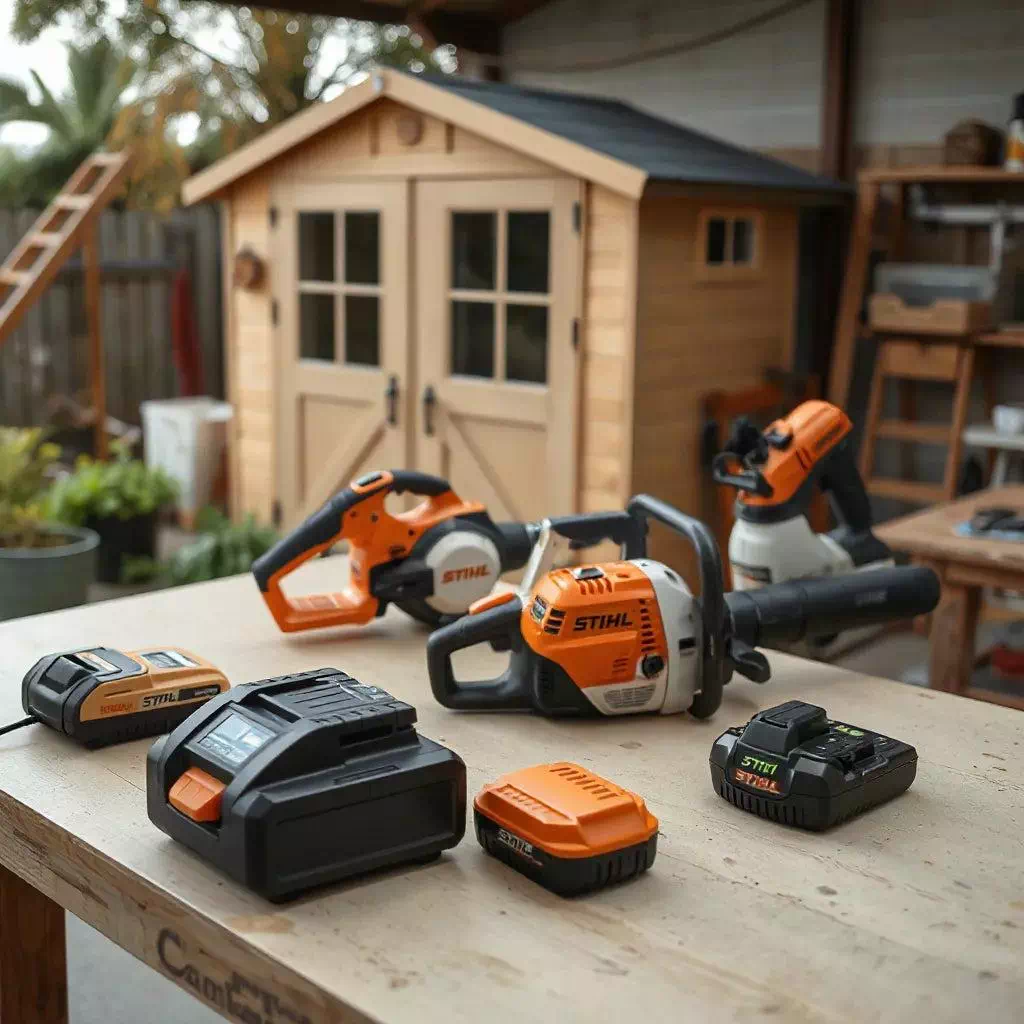
The battery is one of the most important components of any cordless garden tool. Before comparing products, it helps to understand three basic specifications: voltage, amp-hours, and watt-hours.
Voltage: What Does It Tell You?
Voltage is often used as an initial indicator when comparing cordless garden tools. Different voltage platforms are commonly designed for different workloads, although voltage alone does not determine how powerful or effective a tool will be.
For example, a lightweight cordless hedge trimmer used to shape small shrubs may have different power requirements from a battery lawn mower cutting dense grass across a large yard.
When comparing tools, consider the manufacturer’s recommended applications alongside voltage. Motor design, cutting mechanism, airflow, and electronic controls also influence real-world performance.
Battery Capacity and Runtime
Battery capacity is commonly expressed in amp-hours (Ah). A higher Ah rating generally indicates that a battery can supply energy for longer under comparable operating conditions.
Watt-hours (Wh) provide another useful comparison because they account for both voltage and amp-hour capacity:
Watt-hours = Volts × Amp-hours
A battery with greater energy capacity may support longer working sessions, but actual battery runtime depends on workload, operating speed, temperature, battery condition, and tool efficiency.
For buyers, the practical question is not simply which battery has the largest capacity. It is whether the battery can complete the intended job without frequent interruptions.
2. Evaluate Runtime, Charging Time, and Battery Compatibility
A cordless tool is only as convenient as its battery system. Before purchasing, consider how long you need to work, how quickly you can recharge, and whether one battery can support several tools.
Estimate Your Actual Runtime Needs
Different garden tasks place different demands on batteries. Blowing dry leaves across a driveway may consume less energy than clearing wet, heavy debris. Similarly, mowing regularly maintained grass can require less power than cutting tall or overgrown grass.
A practical approach is to estimate how much time each task requires and compare that estimate with the manufacturer’s runtime information.
Remember that advertised runtime may be measured under specific conditions. Continuous operation at maximum power can produce a different result from intermittent use at lower settings.
For larger properties, consider whether purchasing an additional battery would be more useful than choosing a single oversized battery. A spare battery can allow work to continue while another is charging.
Check Charging Time and Charger Specifications
Charging time varies according to battery capacity, charger output, battery temperature, and charging-system design. A larger battery may take longer to recharge, especially when paired with a standard charger.
If you regularly maintain a large garden, charging speed can affect how efficiently you complete several tasks in one day.
Check whether the charger is included in the package, whether a faster compatible charger is available, and whether the battery requires a cooling period before charging after intensive use.
Consider the Entire Battery Platform
Battery compatibility is particularly important when building a collection of cordless garden tools.
Some manufacturers offer a shared battery platform that supports multiple tools, such as a hedge trimmer, leaf blower, grass trimmer, and lawn mower. Using compatible batteries across these products can reduce the need to purchase separate battery systems.
Before choosing a platform, explore the available cordless garden tools to see whether the product range covers your current needs and possible future purchases.
However, compatibility should never be assumed based on appearance or voltage alone. Batteries may differ in connector design, electronic controls, capacity requirements, and supported product ranges.
Before buying, verify the exact compatibility information for every tool and battery. Also consider battery availability, replacement costs, warranty coverage, and whether the platform includes the types of tools you may need in the future.
3. Match Tool Performance to Your Garden

Choosing a tool that is too small for the workload can make gardening frustrating. Buying equipment with more capacity than necessary, on the other hand, may increase cost and weight without delivering meaningful benefits.
Battery Lawn Mower: Consider Lawn Size and Grass Conditions
When shopping for a battery lawn mower, look beyond the advertised cutting width. Consider lawn area, grass height, terrain, storage space, and the amount of trimming required around trees, fences, and garden beds.
A compact mower may be suitable for a small, relatively flat lawn. Larger or more demanding lawns may require greater battery capacity, a wider cutting deck, or a design that accommodates multiple batteries.
Check the cutting-height adjustment, grass collection capacity, handling, and whether the mower supports mulching or side discharge if those features matter to your routine.
If you are comparing options for regular lawn maintenance, browse the available battery lawn mower models and compare their specifications with your lawn size and typical grass conditions.
For lawns with slopes or thick grass, evaluate the mower’s operating recommendations carefully. A battery mower that performs well on regularly maintained grass may need more energy when tackling difficult conditions.
Hedge Trimmer: Balance Cutting Ability and Control

A hedge trimmer should match the type and thickness of the plants you maintain.
Blade length affects how much hedge can be covered in a pass, while tooth spacing and cutting capacity influence the branches a model can handle. Longer blades may improve efficiency on broad hedges but can be harder to control in tight spaces.
Weight distribution is equally important. If you frequently trim tall hedges or work at shoulder height, a lighter tool with comfortable handles may be preferable to a heavier model with a larger battery.
Before purchasing, compare the cutting capacity, blade length, safety features, and handling characteristics of the available hedge trimmers. Always check the manufacturer’s permitted branch diameter rather than assuming that every cordless model can handle thick woody growth.
Leaf Blower: Compare Airflow and Air Speed
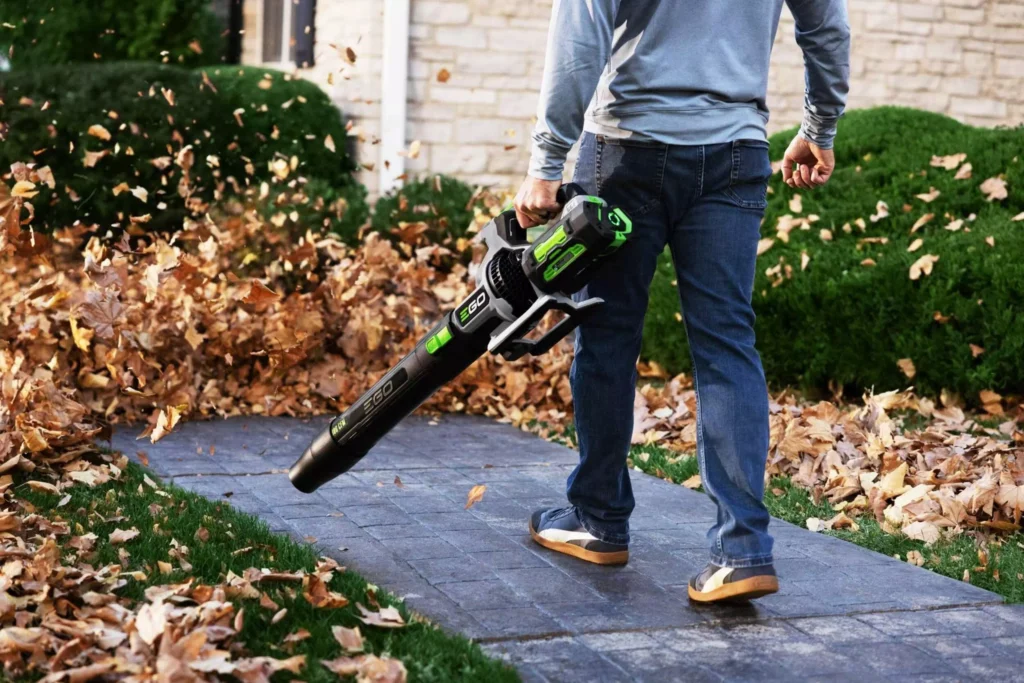
Leaf blowers are often compared using air speed and airflow measurements. Air speed indicates how fast air moves, while airflow describes the volume of air delivered.
Neither measurement alone fully determines performance. The ability to move leaves also depends on moisture, debris density, nozzle design, and the surface being cleared.
For patios, paths, and small yards, a compact blower may provide sufficient performance. Larger properties or areas with substantial seasonal leaf fall may benefit from stronger airflow and a higher-capacity battery.
Variable-speed controls can help conserve battery power when maximum output is unnecessary. Compare the specifications of available leaf blowers to find an option suited to your typical cleanup tasks.
Torque, Motor Power, and Cutting Performance
Torque is a measure of rotational force, while power describes the rate at which work can be performed. Both can matter in tools with rotating or cutting mechanisms, but specifications should be interpreted in the context of the tool’s intended function.
Garden tools do not all publish directly comparable torque figures. For many buyers, practical indicators such as cutting capacity, mowing performance, airflow, and the manufacturer’s recommended workload are more useful than an isolated motor specification.
Whenever possible, compare performance information for the same type of task rather than relying on a single headline number.
4. Consider Noise, Weight, Maintenance, and Safety
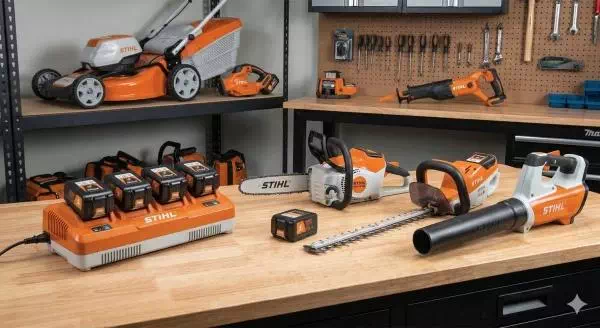
Battery-powered equipment can offer a more convenient gardening experience, but it still requires careful selection and responsible operation.
Noise and Neighbor-Friendly Gardening
Cordless electric tools generally avoid the engine noise associated with gas-powered equipment, making them attractive for suburban gardens and residential areas.
However, battery-powered does not mean silent. Lawn mowers, blowers, and cutting tools can still produce substantial noise, especially at high operating speeds.
If noise is a concern, compare published sound-level information where available. Check local rules governing gardening hours, and consider whether a lower operating setting will be sufficient for the job.
Weight and Ergonomics
Tool weight becomes increasingly important during extended use. A heavy leaf blower can strain the arms and shoulders, while an awkwardly balanced hedge trimmer can make overhead work difficult.
When comparing products, consider the weight with the battery installed, not just the tool’s advertised bare weight.
Look for comfortable grips, manageable controls, adjustable handles where applicable, and designs that allow you to maintain a stable working posture.
If possible, handle the tool before buying it. A model that feels comfortable for several minutes is not necessarily comfortable during a longer gardening session.
Maintenance Requirements
One advantage of many battery-powered garden tools is that they do not require engine-related tasks such as changing engine oil or maintaining spark plugs.
Nevertheless, cordless tools still need regular care.
Clean grass, leaves, and debris from the tool after use, following the manufacturer’s instructions.
Inspect blades, cutting lines, guards, and other working components for wear or damage.
Keep ventilation openings clear where applicable.
Store batteries in the recommended temperature and environmental conditions.
Use only approved batteries and chargers, and inspect them for damage.
Remove or disconnect the battery before cleaning, adjusting, or servicing the tool as directed by its manual.
Good garden tool maintenance helps preserve performance and reduces the likelihood of preventable problems.
Battery and Operating Safety
Use the recommended battery and charger, and never use a battery that appears swollen, cracked, leaking, or otherwise damaged.
Keep batteries away from excessive heat, moisture, and direct sunlight during storage unless the manufacturer specifies otherwise. Follow the instructions for charging, transporting, and disposing of batteries.
For cutting tools, wear suitable eye protection, sturdy footwear, and any additional protective equipment specified in the manual. Keep children and pets away from the work area, and never bypass safety guards or switches.
Before clearing a blockage or inspecting a cutting mechanism, switch off the tool and isolate the power source according to the manufacturer’s instructions. For equipment with detachable batteries, this generally means removing the battery before working on the cutting area.
5. Compare Purchase Price With Long-Term Ownership Costs
The initial price is only one part of the cost of owning battery-powered garden tools.
A basic kit may include the tool, battery, and charger, while some products are sold as tool-only packages. A lower tool-only price may be less attractive if you need to purchase a compatible battery and charger separately.
When comparing options, consider:
Initial purchase price: The cost of the tool, battery, and charger needed to begin working.
Additional batteries: Useful for larger gardens or several tasks completed in one session.
Replacement batteries: Battery performance can decline over time, and replacement costs vary by platform and capacity.
Maintenance and accessories: Cutting blades, trimmer line, protective equipment, and other consumables may add to ownership costs.
Warranty and service: Check coverage for the tool, battery, and charger, as well as access to replacement parts.
A shared battery platform may reduce future costs if you plan to purchase several compatible tools. However, it makes sense only when the tools suit your needs and the batteries provide adequate performance.
Gas-powered tools may remain appropriate for certain demanding applications, so the best choice depends on the workload, operating frequency, local conditions, and available budget.
Who Should Choose Battery-Powered Garden Tools?
Battery-powered garden tools can be particularly suitable for:
Homeowners with small or medium-sized yards: Cordless equipment offers convenient operation without managing fuel or extension cords.
Gardeners who value easy storage and setup: Battery-powered tools can be useful for routine trimming, mowing, and seasonal cleanup.
First-time garden tool buyers: A compatible battery platform can make it easier to build a practical collection over time.
People working in residential neighborhoods: Lower engine noise may be beneficial, although electric tools still produce sound.
Gardeners who prefer less engine maintenance: Battery-powered equipment eliminates many tasks associated with combustion engines, though batteries and cutting components still require care.
For very large properties, prolonged heavy-duty use, or demanding professional workloads, evaluate runtime, charging arrangements, and overall operating costs carefully before committing to a battery system.
Common Mistakes to Avoid When Buying Cordless Garden Tools
Several common assumptions can lead to disappointing purchases.
Mistake 1: Choosing a tool based on voltage alone. Voltage is only one specification. Battery capacity, motor design, cutting performance, and intended workload also matter.
Mistake 2: Assuming advertised runtime reflects every situation. Thick grass, wet leaves, high power settings, and aging batteries can reduce operating time.
Mistake 3: Buying incompatible batteries. Always verify the exact platform and approved battery models before purchasing additional equipment.
Mistake 4: Ignoring the tool’s weight. A powerful tool may be uncomfortable if you need to hold it for extended periods or work above shoulder height.
Mistake 5: Comparing tool-only and complete-kit prices. Make sure you account for the battery and charger required to operate the product.
Mistake 6: Overlooking maintenance and safety. Cordless equipment still needs cleaning, inspection, correct storage, and responsible operation.
Final Buying Checklist: Choose the Right Battery Garden Tools
Before purchasing battery-powered garden tools, take a few minutes to review your requirements.
Identify the main jobs you need to complete, such as mowing, hedge trimming, or leaf clearing.
Estimate the size of your garden and the typical time required for each task.
Compare voltage, battery capacity, runtime, and charging time.
Check the tool’s actual performance specifications for your intended workload.
Confirm battery and charger compatibility across your planned tool collection.
Evaluate weight, balance, grip comfort, noise, and storage requirements.
Review maintenance instructions, safety features, warranty terms, and replacement battery costs.
Compare the total price of a complete working setup rather than the tool alone.
The best battery-powered garden tools are not necessarily the most expensive or the most powerful. They are the tools that match your garden, feel comfortable to use, and deliver enough performance to complete your regular tasks.
By comparing the battery system, real-world workload, ergonomics, maintenance needs, and long-term costs before buying, you can make a more informed decision and build a cordless garden tool collection that works for your outdoor space.
For a broader overview of available equipment, explore our garden power tools collection and compare the tools that best fit your outdoor maintenance needs.